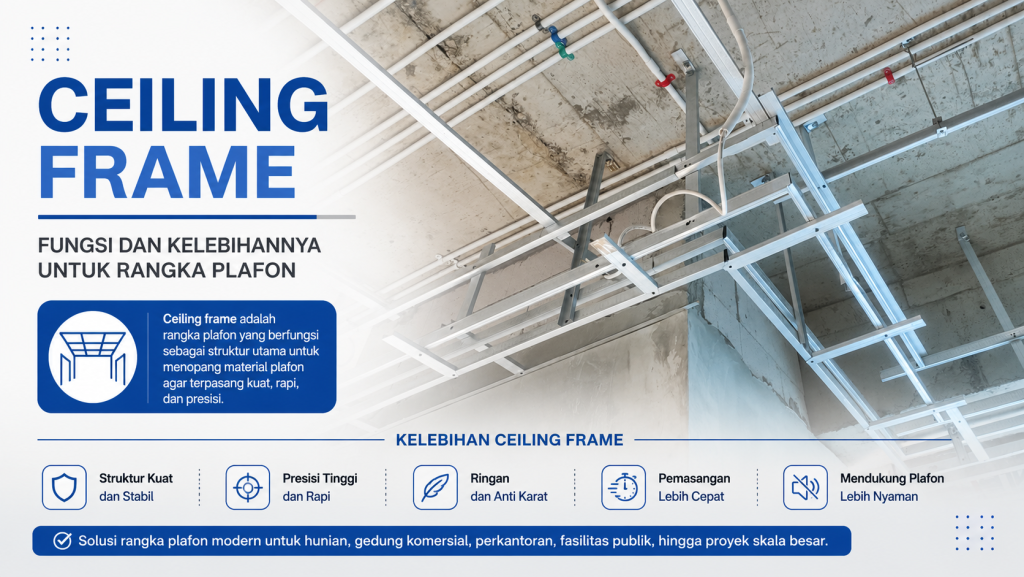
A ceiling is often seen as the final part of an interior space. But behind a clean and neat ceiling surface, there is a framing system that plays an important role. This frame supports the ceiling material, keeps the shape stable, and helps create a more precise finish.
One system that is widely used for this purpose is a ceiling frame. In simple terms, a ceiling frame is the supporting structure installed above the room to hold the ceiling material. It can be used in houses, offices, shops, commercial buildings, and industrial facilities.
Choosing the right ceiling frame can make ceiling work cleaner, stronger, and more durable. This is especially important for modern buildings that need a neat interior finish, accurate installation, and a ceiling system that can adapt to different room designs.
What Is a Ceiling Frame?
A ceiling frame is a framing system installed at the upper part of a room as a support for ceiling materials. It is usually made from metal profiles designed to hold the ceiling surface in a stable position.
In building construction, the ceiling frame works as the base structure before the ceiling is finished with materials such as gypsum board, ceiling panels, or other ceiling coverings. Although the frame is not visible after the ceiling is completed, its quality still affects the final result.
If the ceiling frame is weak or poorly installed, the ceiling can look uneven, crack more easily, or lose its shape over time. That is why choosing a proper ceiling framing system should not be treated as a small detail.
The Function of a Ceiling Frame in Buildings
The main function of a ceiling frame is to support the ceiling. It helps keep the ceiling surface stable and prevents it from moving or sagging easily. For larger rooms, a good framing system is needed to keep the ceiling flat and properly aligned.
A ceiling frame also helps shape the ceiling based on the design. It can be used for flat ceilings, drop ceilings, recessed lighting areas, or multi-level ceiling designs. With the right frame, the ceiling can be formed more neatly and according to the needs of the space.
Another important function is to provide space for installations above the ceiling. In many buildings, the area behind the ceiling is used for wiring, pipes, air conditioning ducts, lighting systems, or other building services. A well-arranged ceiling frame helps make these installations easier to manage without affecting the interior appearance.
Why the Right Ceiling Frame Matters
A ceiling frame is usually hidden after the construction work is done. But because it is hidden, its quality needs to be considered from the start. If there is a problem with the frame, repairs can be inconvenient because the ceiling surface may need to be opened.
A weak frame can cause the ceiling to fail earlier. An inaccurate frame can make the ceiling surface look uneven. Materials that are not suitable for the environment can also reduce the ceiling’s service life.
Because of that, a good ceiling frame should have several important qualities. It needs to be strong, stable, easy to install, resistant to common problems such as termites, and suitable for project requirements.
Benefits of Using a Ceiling Frame
One of the main benefits of a metal ceiling frame is that it is more resistant to termites compared to timber framing. This is important because termites can damage hidden building elements without being noticed at an early stage.
A metal ceiling frame is also more stable in shape. Unlike timber, which can bend or change due to humidity and age, metal profiles can help maintain a more consistent ceiling structure. This supports a cleaner and more precise ceiling finish.
From an installation point of view, ceiling frames can also make the work more efficient. Consistent profiles and a system designed specifically for ceiling needs can help the installation process become faster and easier to control.
Ceiling frames can also be used in many types of buildings. They are suitable for houses, offices, shops, public facilities, and commercial buildings that require neat and long-lasting ceiling structures.
Suitable for Modern Buildings
Modern buildings usually need ceilings that are not only neat, but also able to support the needs of the space. These needs may include lighting, air conditioning systems, wiring, and a cleaner interior design.
A ceiling frame can support these requirements because the framing system can be adjusted to the ceiling layout and installation needs. In office spaces, a neat ceiling can create a more professional impression. In commercial buildings, a well-installed ceiling can improve user comfort. In industrial or working facilities, a stable ceiling system helps keep the space more organized.
With the right framing system, the ceiling becomes more than just a cover for the upper part of a room. It becomes an important part of the building’s interior quality.
Things to Consider Before Choosing a Ceiling Frame
Before choosing a ceiling frame, the first thing to consider is the room requirement. Every space may have different conditions, including the ceiling area, ceiling height, ceiling material, and the installation load placed above the ceiling.
Second, pay attention to the frame material. For long-term use, materials with corrosion protection are generally more reliable, especially in areas that may be exposed to humidity.
Third, make sure the framing system is easy to install and supported by proper accessories. A neat installation will strongly affect the final ceiling result.
Fourth, choose a product with tested profile strength. This is important so the frame can support the ceiling needs more reliably and reduce the risk of problems after the building is in use.
JSteel Ceiling Frame for Modern Ceiling Structures
JSteel provides JSteel Ceiling Frame products designed for modern ceiling structure needs. This product can be used for buildings that require a strong, termite-resistant, and easy-to-install ceiling framing system.
JSteel Ceiling Frame uses materials with corrosion protection and is designed to support long-term ceiling strength. The system also comes with profiles and supporting accessories that help make installation more practical.
For project needs, choosing the right ceiling frame can help create a ceiling that is neater, more stable, and more aligned with the building design.
Conclusion
A ceiling frame plays an important role in a building’s ceiling system. Even though it is not visible after the ceiling is finished, the frame affects the strength, neatness, and durability of the ceiling in the long term.
By choosing a ceiling frame that is strong, stable, termite-resistant, and easy to install, the ceiling result can be cleaner and more reliable for many types of buildings.
For projects that need a modern ceiling framing system, JSteel Ceiling Frame can be a suitable solution for commercial, residential, and industrial building needs.