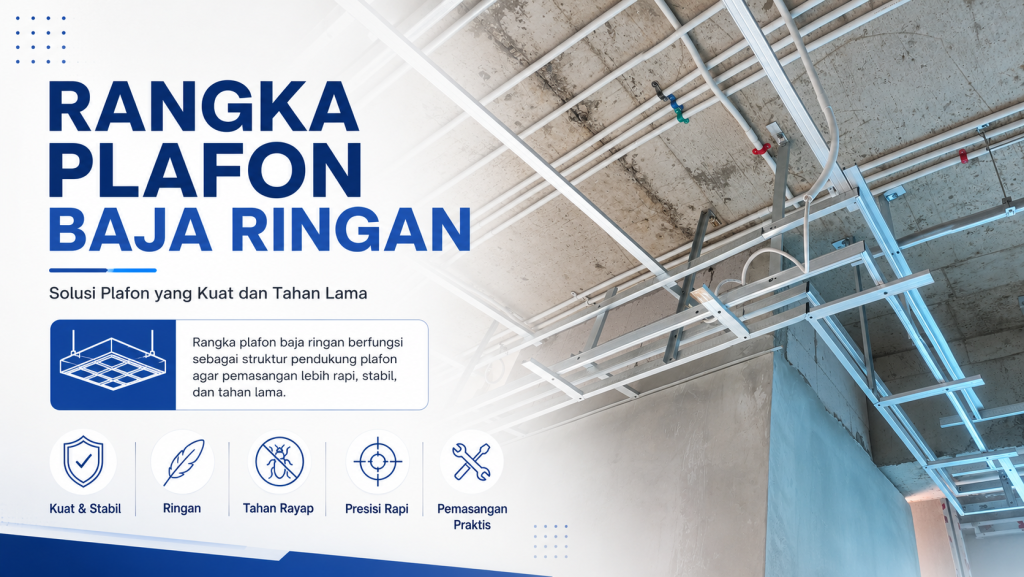
A neat ceiling does not stand on its own. Behind the finished ceiling surface, there is a frame that works as the main support. This frame helps keep the ceiling stable, level, and safe for long-term use.
One option that is widely used today is a lightweight steel ceiling frame. This material is often chosen because it is strong, termite-resistant, and more stable compared to several conventional materials. For modern buildings, this type of ceiling frame can help create a cleaner and more precise finish.
A lightweight steel ceiling frame can be used in many types of buildings, including houses, offices, shops, public facilities, commercial buildings, and industrial spaces. With the right specification and installation, it can become a strong and durable ceiling solution.
What Is a Lightweight Steel Ceiling Frame?
A lightweight steel ceiling frame is a framing system used to support ceiling materials. It is usually made from lightweight metal profiles designed to hold the ceiling surface in a stable position.
In interior construction work, the ceiling frame is installed before finishing materials such as gypsum board, ceiling panels, or other ceiling coverings. Once the ceiling is completed, the frame is no longer visible. However, its quality still has a strong impact on the final result.
If the ceiling frame is not strong enough or not installed properly, the ceiling surface may look uneven, crack easily, or sag in certain areas. That is why the ceiling frame material should be considered carefully from the beginning.
Why Is the Ceiling Frame Important?
The main function of a ceiling frame is to support the ceiling. Without a good frame, ceiling materials cannot be installed securely. For larger rooms, the framing system needs to keep the ceiling surface flat and prevent it from changing shape over time.
The frame also helps shape the interior design. Some rooms need flat ceilings, multi-level ceilings, drop ceilings, or special areas for lighting. All of these designs require a precise framing system so the result looks clean and well-finished.
A ceiling frame also provides space for building installations. Behind the ceiling, there are usually electrical cables, lights, pipes, air conditioning ducts, or other systems. With a well-arranged frame, these installations can be managed without disturbing the room appearance.
Benefits of a Lightweight Steel Ceiling Frame
One of the main benefits of a lightweight steel ceiling frame is its resistance to termites. This is an important point, especially when compared to timber framing. Termites can damage hidden building elements, and the damage is often only noticed when the condition has become serious.
Lightweight steel also has a more stable shape. It does not easily bend due to weather changes or humidity. With a stable frame, the ceiling surface can be installed more evenly and the final result can look cleaner.
From an installation point of view, a lightweight steel ceiling frame is also practical. Consistent profiles make the installation process easier to control. This helps applicators produce more precise work, especially in projects that require a neat ceiling finish.
In addition, lightweight steel has a relatively light weight while still being strong enough for ceiling frame needs. This makes it suitable for many types of buildings without adding excessive load to the main structure.
Durable for Long-Term Use
A ceiling is usually not something that is frequently opened or replaced after installation. Because of that, the frame used behind it needs to be durable. If the frame has problems, repairs can be inconvenient because the ceiling surface may need to be opened.
A lightweight steel ceiling frame can be a safer choice for long-term use. With corrosion-protected material and proper installation, the frame can help keep the ceiling stable for a longer period.
This durability is important for commercial buildings and public facilities that are used every day. A strong and neat ceiling helps make the space feel more comfortable, safer, and less likely to need frequent repairs.
Suitable for Different Types of Buildings
A lightweight steel ceiling frame can be used in many building types. In residential buildings, it helps create a neat ceiling that is safer from termite problems. In offices and shops, a stable ceiling frame can support a more professional interior appearance.
For commercial buildings such as stores, showrooms, clinics, or service centers, a clean ceiling can improve user comfort. In industrial buildings or working facilities, a strong ceiling system helps make the space look more organized.
With proper use, a lightweight steel ceiling frame can support different room needs, whether for small areas, wide spaces, or more complex ceiling designs.
Things to Consider Before Choosing a Ceiling Frame
Before choosing a lightweight steel ceiling frame, the first thing to consider is the room requirement. The room size, ceiling height, ceiling material, and installation load above the ceiling should be planned properly.
Second, pay attention to material quality. For long-term use, it is better to choose materials with corrosion protection. This is especially important for buildings located in humid areas or spaces with less ideal air conditions.
Third, make sure the framing system has the right supporting components. Main profiles, hangers, joints, and accessories need to be used correctly so the frame can perform properly.
Fourth, pay attention to installation quality. Good materials still need proper and neat installation. If the installation is poor, the ceiling can still have problems even when the material itself is good.
Lightweight Steel Ceiling Frame and Ceiling Frame System
In product terms, a lightweight steel ceiling frame is often related to a ceiling frame system. Both refer to a framing system used to support ceiling materials. The term ceiling frame is commonly used in the context of modern construction products or systems.
JSteel provides JSteel Ceiling Frame, designed for modern ceiling structure needs. This product can be used for projects that require a strong, termite-resistant, easy-to-install ceiling frame with a neat final result.
With corrosion-protected material and profiles designed for ceiling applications, JSteel Ceiling Frame can be a suitable option for residential, commercial, and industrial buildings.
Conclusion
A lightweight steel ceiling frame is a suitable solution for buildings that need a strong, neat, and long-lasting ceiling. This material is termite-resistant, more stable, practical to install, and suitable for many building types.
Because the ceiling frame is hidden behind the finished ceiling surface, its quality should be considered from the beginning. The right material, framing system, and installation will strongly affect the final ceiling result.
For modern ceiling frame needs, JSteel Ceiling Frame can help support ceiling strength, neatness, and durability for long-term use.