Air circulation is an important part of a building, especially in large spaces such as warehouses, factories, production facilities, halls, or multipurpose buildings. Without proper airflow, the room can feel hot, stuffy, and less comfortable to use.
This problem usually happens because hot air gets trapped in the upper part of the building. The wider and taller the building is, the more heat can collect near the roof area. If there is no proper exit path, the hot air stays inside and makes the indoor temperature feel uncomfortable.
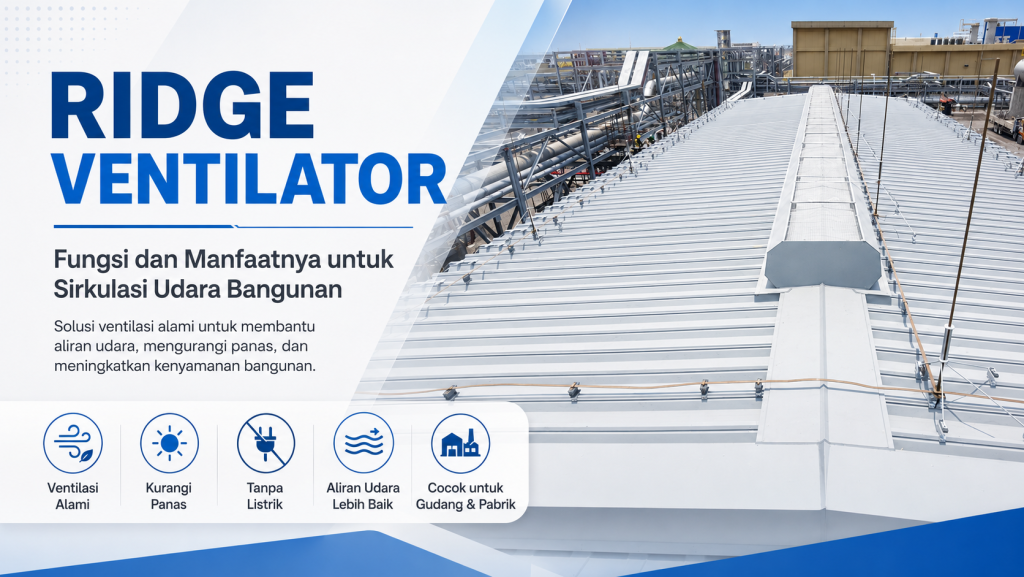
One solution that can help with this issue is a ridge ventilator. This system works as a natural ventilation element installed on the roof ridge, allowing hot air to escape and be replaced by fresher air from below.
What Is a Ridge Ventilator?
A ridge ventilator is a ventilation system usually installed at the highest point of the roof. This position is important because hot air naturally rises and gathers at the top of the building.
In simple terms, a ridge ventilator helps release hot air from inside the building without using electricity. The system uses the pressure difference between indoor and outdoor air. When hot air rises to the upper part of the building, it exits through the roof ventilator. After that, fresher air can enter from below through openings, grilles, or louvers.
This creates a more natural airflow cycle. The building does not fully depend on mechanical systems such as exhaust fans or air conditioning, especially in areas that need a large volume of air movement.
The Function of a Ridge Ventilator in Buildings
The main function of a ridge ventilator is to remove hot air from inside the building. Hot air usually moves upward because it is lighter than cooler air. If the upper part of the building is fully closed, heat will be trapped and make the room feel stuffy.
With a ridge ventilator, hot air has an exit path. This helps keep air moving and makes the room feel more open. For buildings such as warehouses or factories, this function is important because activities inside the building often generate additional heat.
A ridge ventilator can also help reduce excessive humidity. Air that is too humid can make a room uncomfortable and, in the long term, may affect materials, stored goods, or working areas.
Why Building Air Circulation Matters
Many people only pay attention to ventilation after a building starts to feel hot or stuffy. In reality, air circulation should be planned from the beginning, especially for buildings with large indoor volumes.
A building with poor air circulation tends to hold heat more easily. As a result, the interior space becomes less comfortable, especially during the day or when operational activities are high. For workers or building users, this condition can affect comfort and productivity.
In warehouses, airflow can also help maintain the condition of stored goods. Some goods are more sensitive to heat and humidity. With better air movement, storage conditions can be more naturally controlled.
In factories, good ventilation helps create a more suitable working area. Machines, production activities, and people inside the building can increase indoor temperature. If hot air does not escape properly, the working area can become uncomfortable.
Benefits of Ridge Ventilators for Warehouses and Factories
Warehouses and factories are two types of buildings that need good air circulation. These spaces are usually large, have high roofs, and support many activities. Because of that, ridge ventilators can become an important element in helping airflow.
In warehouses, ridge ventilators help release hot air that collects near the roof. This makes the storage area less stuffy, especially during hot weather. Moving air also helps reduce the feeling of humidity inside the building.
In factories, ridge ventilators help remove heat generated by production activities. Although they do not replace all mechanical ventilation needs, natural ventilation systems like this can help reduce heat buildup inside the building.
For multipurpose buildings, ridge ventilators are also useful because the space may be used for different activities. With better airflow, the room can feel more comfortable when used by many people.
Natural Ventilation Without Electricity
One of the key benefits of a ridge ventilator is that it does not depend on electricity. Since it uses natural airflow and pressure differences, the system can operate without additional energy consumption.
This is useful for large buildings. If all ventilation needs rely only on electrical equipment, operational costs can increase. A ridge ventilator helps provide more efficient passive ventilation support.
A system without electricity is also simpler to operate. There is no motor that needs to run continuously, no daily electrical consumption, and no special operation needed for its basic function.
Helps Reduce Heat Around the Roof Area
The roof area is often where hot air collects. During the day, heat from outside enters through the roof, while heat from indoor activities also rises upward. If there is no proper ventilation, this heat remains trapped.
A ridge ventilator helps create an exit path for that hot air. Since it is installed on the roof ridge, the system is placed in the right position to release hot air that moves toward the upper part of the building.
When hot air exits, fresher air can enter from the lower part of the building through openings, louvers, or other ventilation systems. This movement helps create better air exchange inside the building.
Things to Consider Before Using a Ridge Ventilator
Before using a ridge ventilator, the first thing to consider is the type and function of the building. Warehouses, factories, halls, and multipurpose buildings have different ventilation needs. Building size, roof height, and indoor activities should all be considered.
Second, pay attention to the air inlet path. A ridge ventilator works better when replacement air can enter from below. Because of that, openings, grilles, or louvers should also be planned so airflow can work more effectively.
Third, match the material with the building condition. Since it is installed on the roof, a ridge ventilator is exposed directly to heat, rain, wind, and weather changes. Corrosion-resistant materials with good durability are better for long-term use.
Fourth, make sure the installation is done properly. Position, joints, and installation details strongly affect the ventilation function and the building’s protection against leakage risks.
JSteel Ridge Ventilator for Natural Building Ventilation
JSteel provides JSteel Ridge Ventilator through the Unico Ridge Ventilator product. This product works as a natural ventilation system without electricity to help improve building air circulation.
Unico Ridge Ventilator is made from aluminum and AluZinc materials. The system works by using the air pressure difference between inside and outside the building, allowing hot air to escape through the roof ventilator and be replaced by fresher air from below.
This product is suitable for warehouses, factories, and multipurpose buildings that need better airflow. With corrosion protection and materials designed for long-term use, ridge ventilators can become an efficient ventilation solution for various building needs.
Conclusion
A ridge ventilator is a natural ventilation solution that helps release hot air from the upper part of a building. This system works without electricity by using air pressure differences, making it suitable for large buildings such as warehouses, factories, and multipurpose buildings.
With better air circulation, the indoor space can feel more comfortable, less stuffy, and more supportive for activities inside the building. A ridge ventilator can also help reduce heat and humidity trapped around the roof area.
For natural building ventilation needs, JSteel Ridge Ventilator can be an option that supports better airflow without depending on electricity.